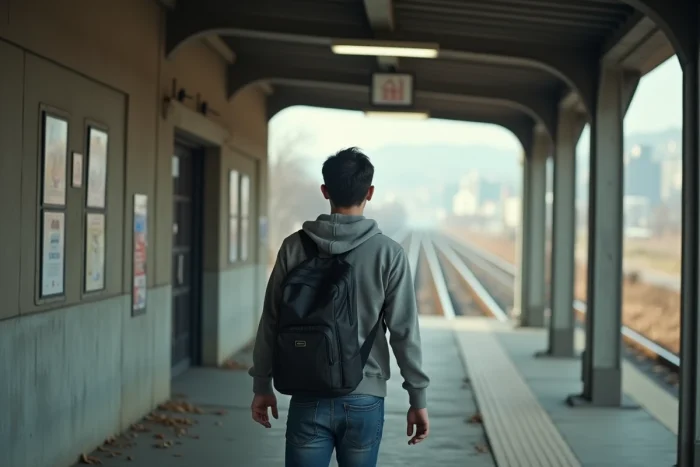
Changing identity in the 21st century involves more than just administrative steps. Shared databases between public and private institutions make any omission risky. Yet, every year, thousands of people manage to erase themselves from the radar by circumventing traditional traceability measures.
Erasing one’s digital traces requires constant vigilance: deleting old accounts, using encrypted networks, bypassing legal geolocation obligations. The most effective solutions are often counterintuitive, far from the popular methods circulated on the Internet.
Common mistakes that complicate soil maintenance and environmental management
Technology infiltrates every aspect of our daily lives, and choosing voluntary disappearance becomes a challenge of rare complexity. The digital footprint clings to every smartphone use, every card payment, every activity on the web or social networks. Thinking one can erase themselves without addressing these traces is like wanting to clean a room while ignoring what’s hidden under the rug.
Classic mistakes are numerous: paying with a bank card, staying in sporadic contact with former acquaintances, acting in haste. These missteps, even minor ones, can collapse weeks of preparation. The temptation to read a message, to discreetly post on a social network, or to keep an old number creates as many breaches. The slightest transaction, a furtive access to an account, is enough to trace the path.
Covering tracks does not tolerate approximation. To avoid the most common pitfalls, it’s better to keep these points of vigilance in mind:
- Using an unsecured or non-disposable mobile phone
- Maintaining activity on social networks
- Transferring money via bank card or digital service
- Regular contacts with acquaintances, even discreet ones
- Impulsive or hasty reactions
In the face of these pitfalls, it’s important to remember that current tools can reconstruct a path in just a few clicks. For those who want to understand how to disappear without a trace, every detail counts, every choice can weigh heavily. Nothing is trivial: a message sent, a card used, a too-familiar connection, and the entire setup crumbles.
Disappearing without leaving a trace: what methods really work?
Voluntary disappearance intrigues, fueling stories and speculation. In France, between 2,500 and 15,000 adults vanish each year without leaving a clue. Japan, for its part, records nearly 100,000 annual disappearances. Behind these numbers lies a certainty: evaporating requires method, composure, and adaptation, at a time when every action leaves a digital trace.
For those aiming for disappearance, several strategies emerge. The reduction of the digital footprint is fundamental:
- closing or anonymizing social media accounts
- avoiding using a phone or bank card in one’s name
- cutting off from the Internet as much as possible
- freeing oneself from any geolocation
Frank Ahearn, a former tracker turned disappearance specialist, recommends spreading false trails: multiplying fake addresses, simulating movements, creating shell companies. Effectiveness comes from the coherence of the scenario, discretion, and the repetition of mundane actions.
Changing appearance, adapting language, choosing inconspicuous clothing: discretion must prevail at every moment. According to David Le Breton or Léna Mauger, everything matters: modifying habits, blending into the local context, not drawing attention to one’s vehicle. Environmental management is equally crucial: avoiding places under video surveillance, favoring anonymous locations, anticipating every interaction.
Some specialized books go further: they encourage preparing a coherent narrative, setting up decoys, anticipating the reactions of relatives or authorities. Voluntary disappearance remains legal in France within specific limits, but beware of judicial or familial obligations: the law watches, and reality does not forgive mistakes.

Rebuilding after a toxic relationship: regaining trust and laying new foundations
Recovering from a toxic relationship is never just about turning the page: it’s a path filled with obstacles, long, but crucial for regaining a solid perspective. Saverio Tomasella, in “The Feeling of Abandonment,” highlights the importance of putting words to the wound: shame, loneliness, fear of falling back, all reasons that drive some to disappear, sometimes cutting all ties. The traces left by these stories are deep: burnout, depression, addictions, loss of social connection, everything can follow.
To regain trust, one must first acknowledge the violence endured, accept the break with the past. Psychologists like Sandrine Bonnefond remind us that rebuilding touches all aspects of life: environment, relationships, projects. Family support is not always present, but creating new landmarks becomes vital. Damien, who chose to disappear, testifies: “Starting over elsewhere also means relearning not to distrust everything.”
To navigate this period, it’s useful to keep the following points in mind:
- Identifying warning signs: extreme fatigue, isolation, feeling lost.
- Working on rebuilding trust, step by step, without succumbing to the pressure of those around.
- Rebuilding priorities: finding safe housing, strengthening one’s sense of security, surrounding oneself with a reliable circle.
Reconstruction does not stop at the psychological level. It entails concrete choices: securing a new living space, rebuilding foundations, envisioning the future differently. The experiences of those who have voluntarily disappeared show: finding an anchor, even fragile, opens the way to a rebirth, far from the chains of the past. Disappearing is sometimes the first step towards a finally chosen existence.