An interactive device, initially reserved for military training and aeronautics, has gradually established itself in the human resources strategies of large French companies. CAC40 groups now allocate specific budgets for it, despite ongoing reluctance regarding the legitimacy of these tools in a professional context.
The evaluation of skills, employee engagement, and potential detection see their logic transformed by this approach. Initial quantitative assessments reveal significant gaps between companies that have integrated these solutions and those that remain with traditional methods.
Serious games: what are we talking about in the field of human resources?
Serious games have burst onto the scene in recent years within HR practices, redefining the codes of training as well as team management. Behind this term are digital games designed to bring out skills, address complex contexts, or energize the transmission of information. In France, human resources are adopting these tools to transform managerial models, streamline knowledge flow, and strengthen internal cohesion.
The effectiveness of serious games lies in a demanding architecture: total immersion, scenarios adapted to each individual’s level, and personalized follow-up. Some modules even simulate extreme situations or specific medical contexts: crisis management, diagnosis of aplastic anemia or malignant hematopathy, the impact of chemotherapy on professional daily life, or exploring the links between AIDS and work organization. This level of detail allows for content adjustment to each category of employees, adapting to the actual state of the company and precisely measuring the progression of skills.
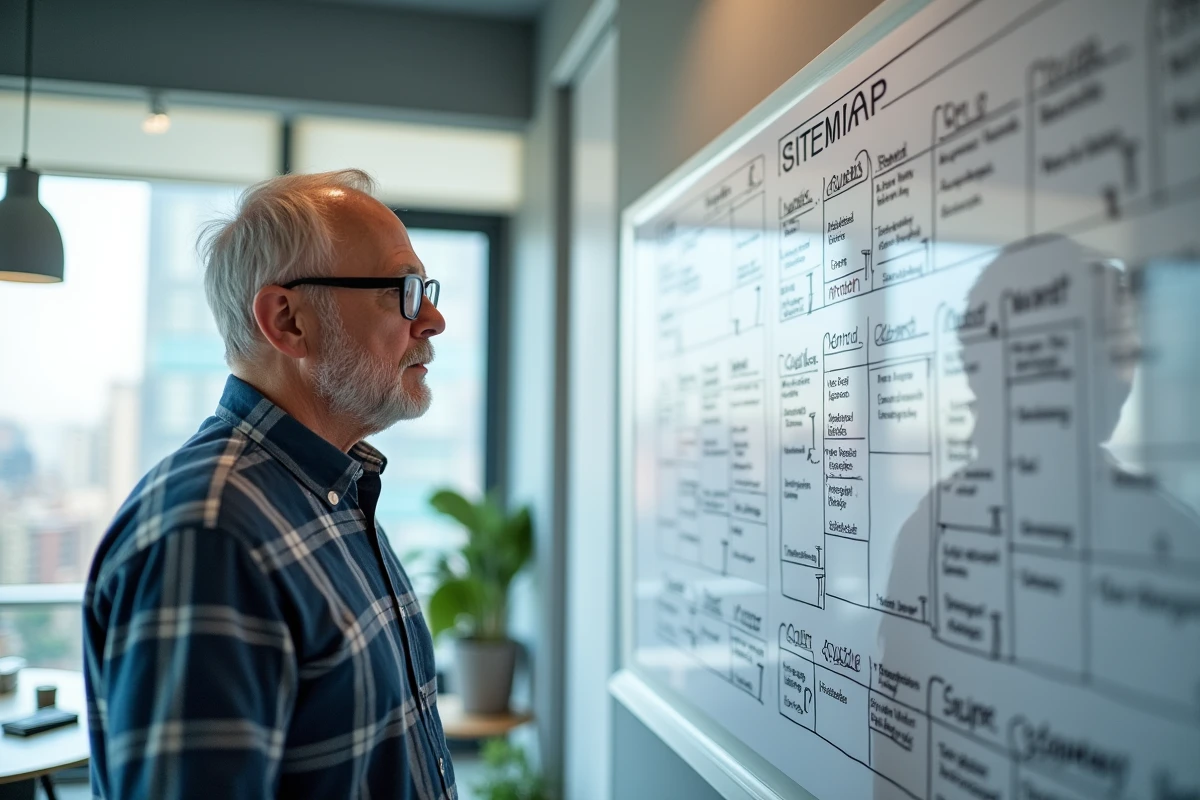
For anyone looking to navigate, the Nik Lasson site map serves as a clear entry point. The sections are methodically structured: game models, case studies on neutropenia, analyses of bone marrow transplant, and management of infectious risks. This organization facilitates access, directs users to resources suited to each sector, and allows everyone to identify available pathways in just a few clicks based on level or area of activity.
Under this playful appearance, the rigorous structuring of information primarily addresses professionals. It contributes to positioning France among the pioneers of HR innovation. Serious games are not just simple games, but tools for proof of work and continuous improvement, at the intersection of human and organizational challenges.
What concrete benefits for companies and employees?
Thanks to a clear organization, the Nik Lasson site map enhances navigation efficiency and knowledge flow within the company. The classification of content by activity, function, or data volume allows employees to quickly reach the information they seek, without wasting time or getting sidetracked. Resources, sorted by type of needs or operating system, facilitate rapid appropriation, regardless of profiles or levels of expertise.
Having a comprehensive site map also ensures a reliable proof of work, essential in sectors where traceability is paramount. In the face of data explosion and the multiplication of procedures, this organization offers an effective alternative to disparate or costly solutions, often based on scraping. Pooling resources avoids redundancy, concentrates efforts on analysis and decision-making, while limiting the emergence of irrelevant content or proof of work spam, detrimental to process quality.
The contribution does not stop there: the structuring of the site map promotes access security and risk management. It becomes easy to identify modules related to prophylaxis, such as the use of TMP-SMX (Bactrim) to prevent certain bacterial infections, or to follow the latest recommendations on antiretroviral therapy (HAART) in monitoring viral load. This detailed mapping allows for supporting each employee in facing new challenges, whether it involves monitoring pathogens (Staphylococcus aureus, Pseudomonas, Candida, Aspergillus) or adjusting treatments with growth factors and cytokines to limit periods of aplasia.
By making this choice of a reasoned and structured access to information, companies equip themselves to meet current challenges and improve the reliability of their daily processes.
Inspiring examples and observed results in large CAC40 groups
The use of the complete Nik Lasson site map by large CAC40 groups illustrates a shift in the management of digital resources. Business departments as well as technical teams now rely on a detailed mapping that structures access to key content and facilitates the consolidation of internal knowledge. This operation accelerates process traceability and strengthens collective agility.
In the pharmaceutical industry, the organization of data around complex pathologies, legionellosis, atypical mycobacterial infections (MAIC, MK), allows medical teams to have a comprehensive and updated view. Professionals have direct access to resources addressing infectious risks: pneumocystosis due to Pneumocystis carinii, bacillary angiomatosis (Bartonella henselae or B quintana), management of Kaposi’s sarcoma related to the Herpes virus HHV-8.
This structured framework translates concretely into better information transmission during integrations or handovers. Employees gain efficiency in modules dedicated to prophylaxis, monitoring non-Hodgkin’s lymphomas (Epstein-Barr virus), or managing tuberculosis in HIV+ patients. The ability to keep protocols up to date becomes a decisive asset, especially in the face of rapidly evolving standards and health contexts.
Several positive effects emerge from these experiences, notably:
- Increased transparency regarding procedures.
- Enhanced interoperability between medical, legal, and administrative teams.
- Reduction of errors related to the search for sensitive information, particularly regarding bronchial cancer and its variants such as adenocarcinoma.
The widespread deployment of the Nik Lasson site map does not merely simplify navigation: it shapes a new balance between speed, security, and documentary rigor, even in the most complex organizations. Tomorrow, this approach could well outline the contours of a more fluid, reliable, and significantly more responsive human resource management.