Since September 1, 2026, buying a discounted t-shirt may cost much more than before. An environmental penalty now affects ultra-fast fashion products, with a contribution that can reach 50% of the price. This new regulatory framework changes the game for those who want to adopt a responsible and ethical fashion in their daily lives, but the issue goes far beyond just the wallet.
Penalty on ultra-fast fashion: what the 2026 law changes
The measure that came into effect on September 1, 2026, targets brands whose collections are renewed at a pace deemed excessive. The penalty can reach €12 per item in 2026, then €19.50 in 2030. Second-hand clothing is excluded from the measure.
In practical terms, this additional cost makes low-priced items with very short lifespans less attractive. For consumers, the consequence is direct: disposable pieces become mechanically more expensive than some sustainable alternatives.
Another obligation is coming. The law of July 8, 2026, requires online sellers to inform about the manufacturing locations of textile products. Starting January 1, 2027, advertising will be prohibited for brands targeted by the measure, subject to the conditions set by decree. In other words, it becomes easier to check where a garment comes from before buying it.
For those who want to identify transparent supply chains, exploring the La Mode Éthique website allows you to spot brands committed to this approach.
Sustainable textile materials: read the labels first
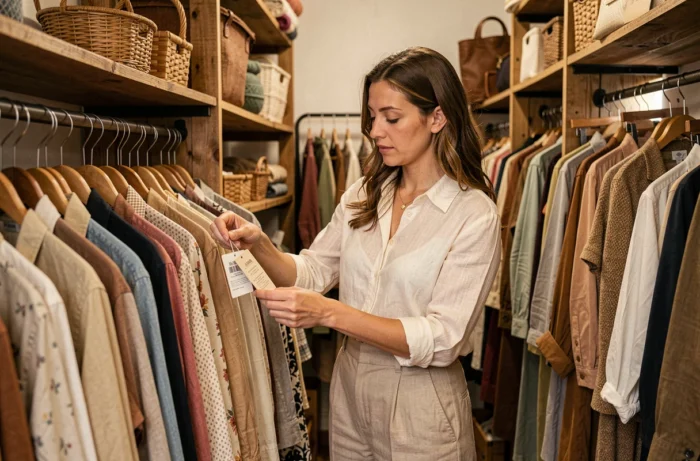
Have you ever turned a label over to find “100% polyester” on a garment sold as “eco-friendly”? It’s a reflex to keep. The composition remains the first reliable indicator of a garment’s environmental impact.
Polyester, derived from petroleum, releases plastic microfibers with every wash. Conventional cotton consumes large amounts of water and pesticides. These two materials dominate the global textile market.
Alternatives exist, but they are not all equal. Here are concrete benchmarks to look for on a label:
- Certified organic cotton (GOTS): grown without synthetic pesticides, with specifications that also cover working conditions in factories
- European linen: a fiber that grows without irrigation in northern France and Belgium, with low chemical input needs
- Post-consumer recycled polyester: made from plastic bottles or used textiles, it reduces dependence on virgin petroleum but continues to release microfibers during washing
- Hemp: durable, low water consumption, but still marginal in the mainstream textile offer
A label on the tag is not always enough. The mention “recycled material” can refer to 5% of the fabric or 95%. Looking at the exact percentage is the only way to know what you are really buying.
Second-hand and maintenance: extending the lifespan of garments
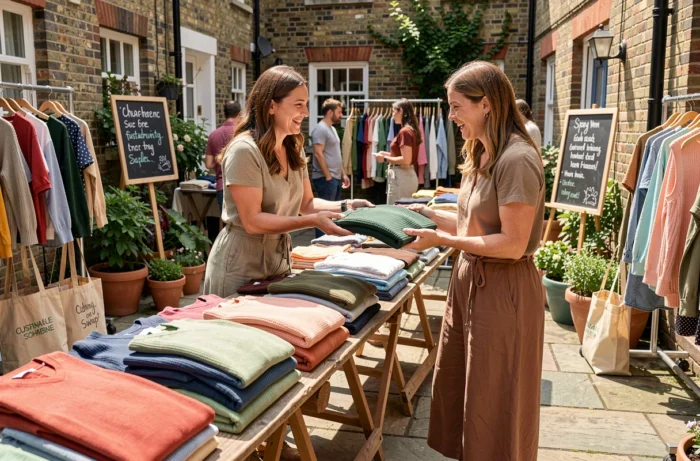
Buying less and keeping your pieces longer remains the most effective lever. Second-hand contributes doubly: it avoids the production of a new garment and extends the life of an existing garment.
The second-hand textile market has grown significantly in recent years. Second-hand clothing is also excluded from the 2026 environmental penalty, which confirms its status as a virtuous circuit in the eyes of the legislator.
Daily maintenance plays an underestimated role. Washing at low temperatures, spacing out washes when the garment is not actually dirty, avoiding the dryer on delicate fibers: these simple actions significantly extend the lifespan of fabrics.
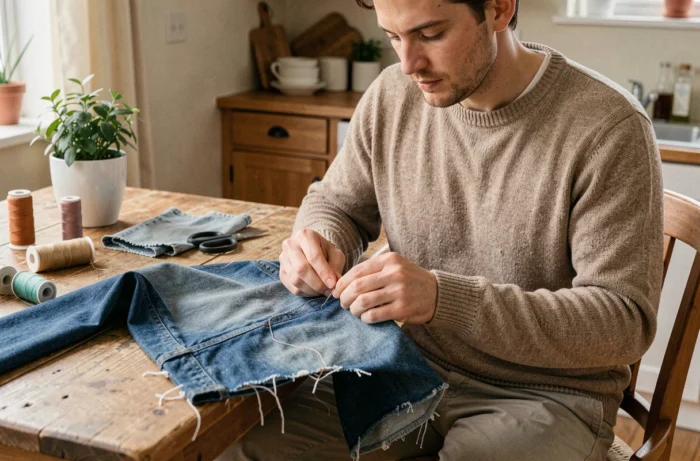
Repairing also deserves attention. Sewing on a button takes five minutes. Having a tear mended by a tailor costs a few euros. Repairing a garment almost always costs less than replacing it, even with a second-hand piece.
Textile greenwashing: traps to spot
Some brands showcase “conscious” or “eco-friendly” collections without corresponding to a verifiable specification. Since the destruction of unsold textiles has been prohibited for large companies in the European Union since July 19, 2026, brand commitments are easier to verify.
Here are some concrete warning signs:
- A garment labeled “sustainable” without any recognized certification (GOTS, Oeko-Tex, Fair Trade)
- A brand that communicates about a “responsible capsule” representing less than 5% of its total catalog
- Vague terms like “natural materials” without specifying the type of fiber or its origin
The obligation to indicate manufacturing locations for online sales, provided by the July 2026 law, should limit these practices. In the meantime, cross-referencing the composition label, the country of manufacture, and the presence of a label remains the most reliable method.
Building an ethical wardrobe without buying everything new
Transitioning to responsible fashion does not mean emptying your closets to start from scratch. That would even contradict the goal of reducing textile consumption.
The starting point is an honest inventory. Identify the pieces you wear regularly, those you have forgotten, those that can be given away or resold. This sorting helps to pinpoint the real gaps in your wardrobe, rather than buying on impulse.
When a purchase is necessary, favoring versatile and high-quality pieces avoids accumulation. A well-cut pair of pants in a durable material can be paired with more tops than a very trendy model worn for one season.
The unit cost of an ethical garment is often higher. When averaged over the number of times it is worn, it frequently ends up being cheaper than a disposable fashion item replaced after a few uses. The 2026 penalty further accentuates this gap by increasing the cost of ultra-fast products.
European and French regulations are moving towards greater transparency and responsibility. Every label read, every garment repaired, every thoughtful purchase contributes to this movement, without needing to transform your habits overnight.