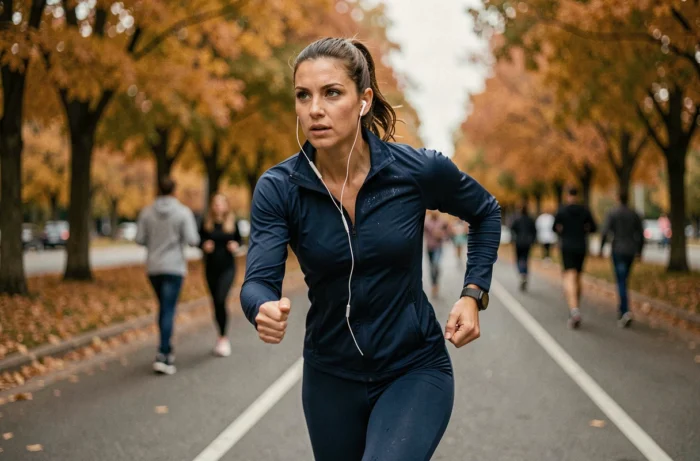
Wearables today generate a volume of data that most athletes do not know how to interpret. Recovery score, heart rate variability, skin temperature, sleep quality: these metrics accumulate without a clear arbitration between what the watch displays and what the body expresses.
The gap between the trust placed in embedded algorithms and the athletes’ ability to read their own physiological signals continues to widen.
Wearables and training load: when the algorithm decides for you
The AI integrated into watches and sensors no longer just measures fitness. It now arbitrates load and fatigue risk in real-time. The shift is clear: the tool moves from being a thermometer to a prescriber.
The problem arises when the athlete blindly follows a rest recommendation while their feelings indicate otherwise. A degraded recovery score after a restless night does not always mean an inability to perform. Algorithms weigh heart rate variability and deep sleep, but they ignore emotional context, daily motivation, or the specifics of the planned session.
This data deserves to be treated as one signal among others, not as a verdict. A dashboard displaying a red light should be cross-referenced with at least two subjective indicators: perception of muscle fatigue and quality of the warm-up.
If these two signals are green, the session can be maintained with an adjustment in intensity. Several resources compile field feedback on these arbitrations, notably the freesport.fr website dedicated to sports where practitioners share their adaptation strategies.
Performance in hot conditions: adjusting pace with the WBGT
Heat acclimatization actively improves endurance performance in hot environments. This point is now consensus in recent publications. However, passive exposure to heat after exercise (sauna, hot bath) does not yet have robust evidence to improve performance itself.
The distinction is crucial for anyone preparing for a summer competition. We observe that many training plans still ignore the thermal variable. The classic reflex remains to increase volume or intensity, while the most cost-effective lever is to adapt the session to the race weather.
Humidity and cardiovascular drift
The WBGT (Wet Bulb Globe Temperature) and wet bulb temperature are the most reliable benchmarks for adjusting pace in hot and humid conditions. These indicators incorporate relative humidity, solar radiation, and wind speed, where dry temperature alone says almost nothing about actual thermal stress.
When the WBGT exceeds a certain threshold, cardiovascular drift accelerates: heart rate increases for the same effort, and skin blood flow competes with muscle blood flow. The result is a drop in performance that has nothing to do with a lack of preparation.
- Schedule intensity sessions during the coolest hours and reserve hot slots for fundamental endurance outings, deliberately slowed down.
- Integrate blocks of active acclimatization (training in moderate heat) over ten days before a summer competition, gradually increasing exposure time.
- Use a portable wet bulb thermometer or a weather app that displays the WBGT to decide in real-time on the target pace, rather than following a rigid plan based on temperate conditions.
AI-driven recovery: what sensors really measure
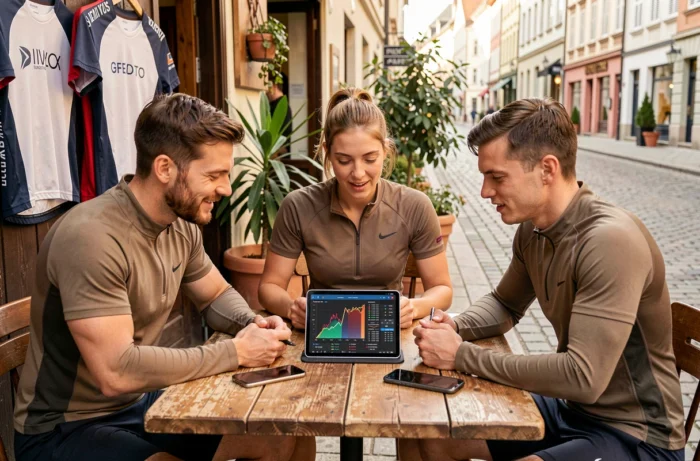
Recovery tracking tools have taken a step towards real-time personalization. The latest platforms cross-reference sleep, nighttime heart rate variability, and overload markers to generate individualized recommendations each morning.
The trap is to confuse measurement accuracy with recommendation relevance. A sensor can measure deep sleep duration with a reasonable margin of error. The algorithm that deduces “complete rest recommended” or “high-intensity session possible” adds a layer of interpretation whose rules remain opaque to the user.
Cross-referencing objective data and field feelings
A reliable wearable does not replace an annotated training log. We recommend noting each day, in three words maximum, the overall feeling before the session. Over four to six weeks, the correlation between these annotations and algorithmic scores reveals the sensor biases specific to each individual.
Some athletes sleep little but recover well. Others show excellent sleep scores but carry persistent muscle fatigue. The sensor measures proxies, not fatigue itself. Learning to spot the discrepancies between the dashboard and muscular reality is the most underestimated skill in current physical preparation.
Sports nutrition and endurance: timing errors that hinder performance
The quality of nutrition matters, but nutritional timing around effort remains the most often mismanaged factor. We find that the majority of endurance athletes underestimate the post-effort window and overestimate pre-competition intake.
A meal too rich in fiber or fat in the two hours before intense effort slows gastric emptying. The result: digestive discomfort and a decrease in the ability to maintain target intensity. Conversely, delaying carbohydrate intake after a long session compromises muscle glycogen resynthesis for the next session.
- Test each nutritional strategy during training before applying it in competition, including gels and effort drinks, to identify individual intolerances.
- Prioritize simple carbohydrate intake within half an hour following an endurance effort exceeding one hour, even before thinking about protein.
- Adjust portions to the actual energy expenditure of the session rather than to a theoretical grid: an easy outing does not require the same recharge as an intensive interval session.
The next frontier is not to accumulate more data, but to learn to ignore some of it. An athlete who knows when to listen to their watch and when to listen to their legs has an advantage that the algorithm alone cannot provide. The field remains the only laboratory where performance is confirmed.