
Position B on the selector of an automatic transmission intrigues many drivers, especially those transitioning from a conventional vehicle to a hybrid or electric model. This letter does not correspond to a standard gear or a typical driving mode: it activates regenerative braking, a mechanism that converts kinetic energy into electricity to recharge the battery.
Does this B mode deliver on its promises of energy savings in all driving situations?
Regenerative braking in B mode: what happens mechanically
When the gear lever is in position D, the car moves forward with light engine braking when the driver lifts their foot off the accelerator pedal. The vehicle rolls almost freely, which promotes inertia on flat terrain.
By switching to position B, the electric motor reverses its role: it becomes a generator. The electromagnetic resistance created slows the vehicle down more noticeably. The recovered energy directly powers the high-voltage battery. This principle applies to both electric cars and hybrids equipped with an automatic transmission featuring B mode.
To fully understand the B position on an automatic transmission, it is essential to remember that this mode does not replace the brake pedal. It complements traditional braking by adding a gradual deceleration, but the hydraulic system remains the priority for any emergency stop.
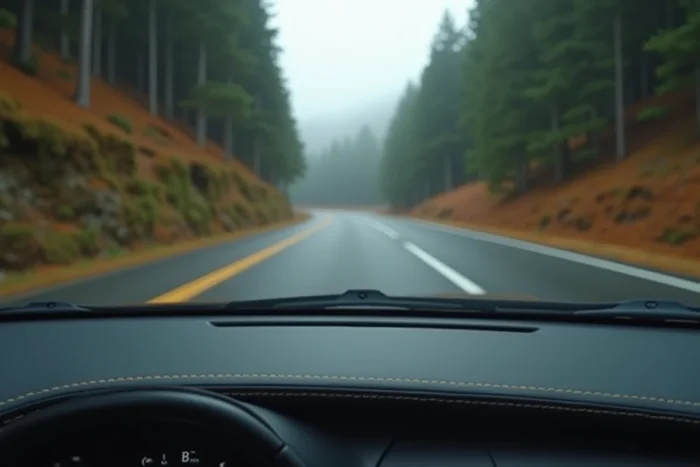
B position in descent and in the city: scenarios where the mode is genuinely useful
B mode shows its maximum effectiveness in two specific contexts. Confusing them with universal usage would be a mistake.
Prolonged descents in the mountains
On a downhill road, keeping your foot on the brake pedal for several kilometers can cause overheating of the discs and pads. B mode limits the wear of mechanical brakes by ensuring continuous deceleration through the electric motor. The battery recharges in parallel, partially compensating for the energy expended during the ascent.
Urban driving with frequent stops
In the city, each deceleration before a red light or stop sign becomes an opportunity to recover energy. Regenerative braking turns each slowdown into partial recharging. Drivers who anticipate stops and release the accelerator early make the most of this mode.
Here are the situations where switching to position B provides a tangible benefit:
- Descending mountain passes or multi-level parking, where enhanced engine braking protects the mechanical braking system
- Dense traffic with close phases of acceleration and deceleration, typical of urban driving
- Approaching roundabouts or 30 km/h zones, where lifting off the accelerator is enough to slow down without touching the brake pedal
B mode on winding highways: when regenerative becomes counterproductive
B mode is often presented as an eco-friendly reflex to adopt everywhere. On highways with consecutive curves, the technical reality tells a different story.
On this type of route, the driver alternates between accelerating out of turns and decelerating into curves. Each release of the accelerator in B mode triggers strong regenerative braking, which slows the vehicle more than necessary. The driver then has to accelerate harder to maintain cruising speed.
This repeated cycle (regenerative braking followed by strong re-acceleration) consumes more energy than D mode, where the vehicle’s natural inertia is sufficient to navigate curves without excessive speed loss. The net energy balance can become negative because the energy recovered during regenerative braking is less than that expended to re-launch the vehicle.
Conversely, on a winding descent where gravity provides the re-launch energy, B mode regains its full interest. The distinction lies in the road profile: flat and winding, D mode is preferable; descending and winding, B mode takes the advantage.

Comparison of D mode and B mode according to road profile
The table below summarizes the vehicle’s behavior based on the selected mode and the type of road.
| Road Profile | D Mode | B Mode |
|---|---|---|
| Flat highway | Stable speed, low engine demand | Unwanted braking at the slightest release, increased consumption |
| Winding highway (flat) | Inertia carries the vehicle through curves | Excessive deceleration, frequent re-accelerations |
| Prolonged descent | Mechanical brakes heavily engaged | Effective regenerative braking, battery recharge |
| Urban traffic | Traditional braking at each stop | Energy recovery at each deceleration |
| Mountain road (uphill then downhill) | Suitable for uphill | Suitable for downhill to compensate for the expenditure of the ascent |
This comparison shows that the choice between D and B depends on the terrain, not a one-size-fits-all rule. Keeping B mode engaged at all times is not a reliable energy-saving strategy.
Tips for using B mode in daily driving
Some principles allow for the relevant use of B position without degrading range or driving comfort:
- Activate B mode only when approaching a predictable slowdown (light, tight turn, descent), never on a stretch where speed needs to remain constant
- Switch back to D mode as soon as the road becomes flat and smooth, to let the vehicle take advantage of its momentum
- Never consider B mode as a substitute for the brake pedal: in case of emergency braking, only the hydraulic system guarantees a safe stop
- Monitor the energy flow on the dashboard screen to check that regenerative braking is indeed recovering energy and not causing unnecessary acceleration-braking cycles
Alternating between D and B according to the terrain remains the most effective method to maximize the range of an electric or hybrid vehicle. B mode is a driving tool, not a permanent setting. Keeping this distinction in mind changes how one utilizes their automatic transmission on a daily basis.