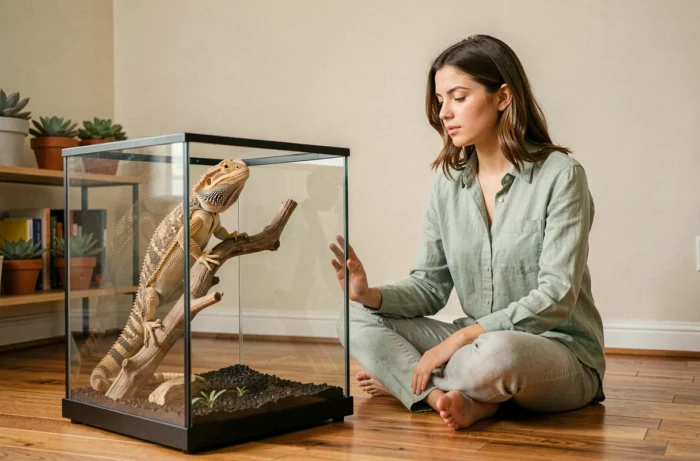
Adopting a rabbit, a bearded dragon or a zebra finch requires different resources than welcoming a cat into your home. In France, the term NAC (new companion animal) covers all species that are neither dogs nor cats, from rodents and reptiles to certain birds and fish.
Regulations distinguish between domestic and non-domestic animals, and this classification determines the requirements for keeping them. Beyond the legal rules, however, it is important to understand what each species needs day to day.
Domestic and non-domestic species: a crucial regulatory distinction
The rules that apply do not depend on the animal’s common name. A tame ferret does not have the same legal status as a royal python, even though both are commonly referred to as NACs. Only species listed in the ministerial order of 11 August 2006 are considered domestic. They can be kept without prior notification.
For non-domestic species, there are three levels of regulation: keeping them without restrictions, keeping them subject to notification to the prefect, or keeping them subject to prior authorization. The applicable level may depend on just one factor: the number of animals kept can change which rules apply.
A reptile keeper who owns one or two individuals of a species listed in column (a) of Annex 2 to the ministerial order does not need to complete any formalities. However, exceeding the number allowed for that species means they must obtain authorization.
A table of new companion animals on Animal News lists the main groups concerned and helps with this initial regulatory check.
| Category | Common examples | Predominant status | Typical requirement |
|---|---|---|---|
| Rodents and lagomorphs | Rabbit, guinea pig, hamster, rat | Domestic | None |
| Ferret | Ferret (Mustela putorius furo) | Domestic | None |
| Cage birds | Canary, zebra finch, budgerigar | Domestic | None |
| Common reptiles | Bearded dragon, leopard gecko, royal python | Non-domestic | No restrictions or notification, depending on the species and number kept |
| Tortoises | Hermann’s tortoise | Non-domestic (protected) | Prior authorization |
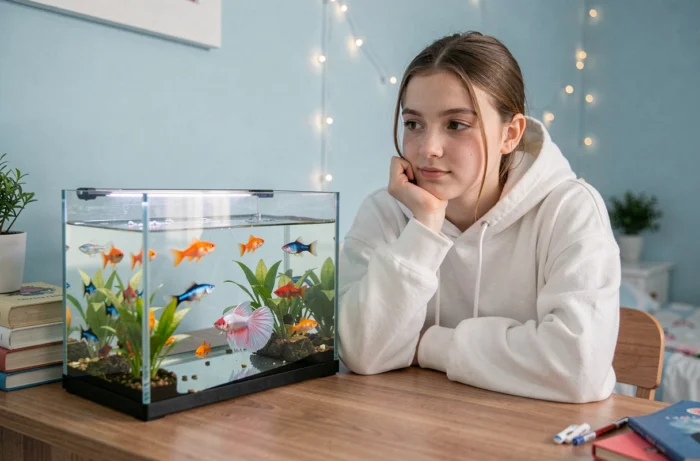
| Ornamental fish | Goldfish, guppy, betta | Domestic (most captive-bred species) | None |

NACs permitted in France: numbers and traceability make a difference
Most online guides provide a list of “permitted” species without explaining that whether keeping them is permitted also depends on the number of animals. A pair of cockatiels does not entail any special requirements. Breeding them until you have an aviary with dozens of birds may require notification or even a certificate of competency, depending on the species.
Traceability is an often-overlooked requirement. The formalities vary depending on the animal and its circumstances: microchip identification for ferrets, an intra-community certificate for an imported reptile, or an entry-and-exit register for a licensed breeder. Failing to consider this when buying an animal can cause problems during an inspection or if the animal is later transferred to someone else.
Before you buy: steps to take
- Check Annex 2 to the ministerial order to see which column (a, b or c) lists the species you are considering, and verify the applicable limit on the number of animals
- Ask the seller for the traceability documents required for the species (transfer certificate, identification document, and any CITES permit for species listed under the Washington Convention)
- Make sure the seller or breeder has the required authorizations, since buying an illegally kept animal can also make the buyer liable
Is a NAC right for your household? Four criteria the law does not assess
Being legally allowed to keep an animal does not guarantee that your household can meet its needs over the long term. NACs are often abandoned for the same reasons: an impulsive purchase followed by the gradual realization that the animal’s needs are incompatible with the owner’s daily life.
Space and environment
An adult bearded dragon needs a terrarium at least 120 cm long, with a carefully controlled temperature gradient. A lop-eared rabbit needs several hours outside its enclosure every day. Every species has non-negotiable habitat requirements (temperature, humidity, UV lighting for reptiles, ventilation for ferrets) that go well beyond the size of its cage.
Specialist veterinary care
Not all veterinarians treat NACs. Specialist consultations are generally more expensive than those for dogs and cats, and qualified practitioners are concentrated in urban areas. Before adopting, find a NAC veterinarian within reach of your home to avoid a crisis in an emergency.
Specialized diet
Guinea pigs cannot synthesize vitamin C, so their diet must provide it every day to prevent serious deficiencies. Snakes eat whole prey (usually frozen rodents), which requires a reliable supply and suitable storage. A NAC’s diet is never just a matter of generic kibble.
Care arrangements
Asking a neighbor to look after a cat while you are on vacation is easy. Finding someone who can keep a tropical terrarium at the right temperature and feed a chameleon live insects is much harder. A lack of reliable care arrangements is one of the main reasons reptiles and exotic birds are abandoned.
Choosing a NAC to suit your lifestyle: how species differ
Social rodents (rats, guinea pigs) need daily interaction with their owner and do better in groups, which means they need more space and may incur higher veterinary costs. Reptiles such as leopard geckos are more independent, but require an upfront investment in equipment (a heated terrarium, UV lighting and a thermostat) and consistent attention to environmental conditions.
Pet birds vary considerably in lifespan: a canary lives an average of six to eight years, while some parrots live for several decades. A NAC’s life expectancy is a long-term commitment for the household that needs to be considered from the outset, including in the event of a move or a change in family circumstances.
Choosing a NAC is therefore about more than aesthetic preference or a passing whim. Whether adoption is viable in the long term depends on how well the species’ biological needs match the household’s actual resources (space, budget, availability and access to veterinary care).