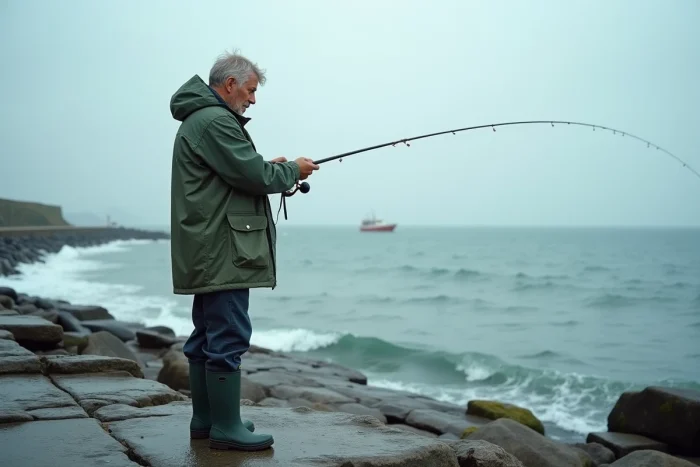
Guilvinec attracts fishermen for its port, its trawlers, and the Bigouden atmosphere. For those looking to cast from the shore, the real advantage of the area lies in the diversity of spots accessible on foot within a few kilometers: rocky flats, jetties, beaches open to the Atlantic. However, one must know where to position themselves according to the tide, the season, and the current regulations in force.
Rocky bottom between Guilvinec and Léchiagat: where the bass really positions itself
Have you noticed that local fishermen often avoid the port jetties? They prefer the rocky areas located between Guilvinec and Léchiagat, where the lateral current forms veins of water at mid-tide. This current pushes prey towards the crevices, and the bass lies in wait there.
Specifically, look for rocky flats exposed to the rising tide. A marked lateral current at mid-tide indicates a productive spot. These areas are not always shown on tourist maps, but they can be identified by observing the water’s surface: regular eddies reveal the presence of submerged structures.
To explore these spots in detail, those preparing for a shore fishing trip in Guilvinec with Heya will find useful geolocated markers. The idea remains the same: leave the easy access points to target the rocks where the fish gather.
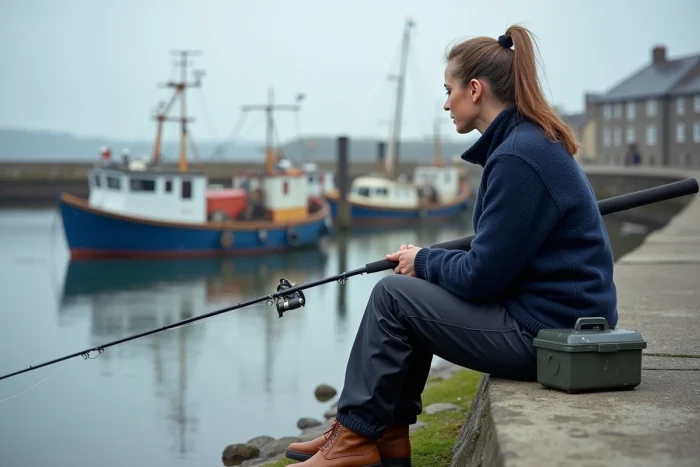
Tide and time slots in Guilvinec: when to position yourself on the coast
The tide dictates everything in this area of southern Finistère. Casting at the wrong time is like fishing in an empty bathtub. Two windows deserve your attention.
Rising tide on the flats
The two hours surrounding mid-rising tide are the most productive on rocky spots. The current pushes small crustaceans and baitfish towards the shore. The bass follows. Average to high coefficients amplify this phenomenon.
Falling tide for surfcasting
On the open beaches (particularly on the Penmarc’h side), the falling tide frees up areas of wet sand where marine worms become active. This is the surfcasting window. The target species change: the focus shifts more towards pollock and flatfish.
In summary, adapt the spot to the tide cycle rather than the other way around. Fishermen who stick to a single spot regardless of the time often miss the activity windows.
Species from the shore in Guilvinec: bass, pollock, and whiting depending on the spots
The Bigouden coastline does not offer the same fish everywhere. Each type of spot corresponds to specific species.
- Bass (loup): present in rocky areas with current, especially from May to October. Minimum catch size must be respected according to the current prefectural orders in Finistère.
- Pollock: common around rocky heads and in areas of surf. It readily bites on soft lures cast from the flats.
- Whiting: abundant on the jetties and rock formations of the port. Less sought after, it provides regular action for beginner fishermen or those fishing with family.
Why does this distinction matter? Because a fisherman who sets up on the port jetty with a bass lure will waste time. The bass is further out, on the rocks exposed to the current. Choosing your spot based on the targeted species increases the chances of a catch.
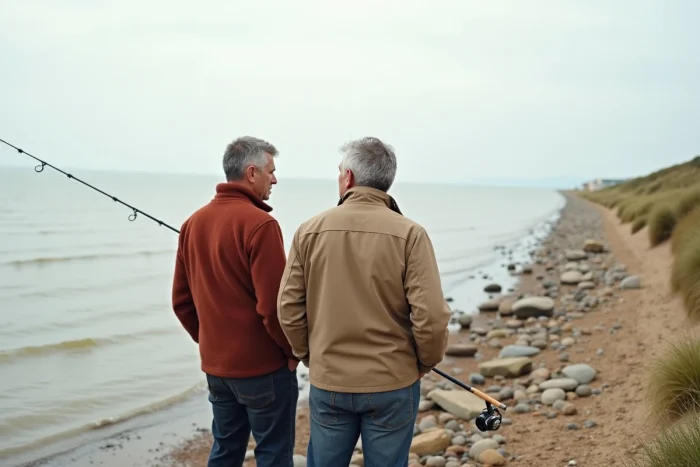
Local regulations and health restrictions in the Guilvinec area
The Bigouden region is subject to regular inspections, particularly on the jetties and piers frequented. Since 2023, several prefectural orders have strengthened recreational fishing rules at sea in Finistère: minimum catch sizes, daily quantity limits, types of gear. The DIRM NAMO (Interregional Directorate of the Sea North Atlantic – English Channel West) publishes applicable summaries.
The collection of bivalve shellfish is regularly prohibited on the intertidal zone of the Guilvinec – Léchiagat area. Ifremer and the prefecture of Finistère publish temporary closure orders related to microbiological contamination or toxins (algal blooms). Clams, cockles, and tellins: before collecting anything, check the current orders with the Departmental Directorate of Territories and the Sea.
This health aspect is often absent from spot guides. However, it conditions the legality of your outing and, above all, your health.
Safety on the exposed rocks of the Bigouden coastline
The rocky flats of the Guilvinec – Penmarc’h area are slippery, uneven, and sometimes submerged. A few precautions make the difference between a good session and an accident:
- Wear shoes with felt or cleated soles, suitable for rocks covered in algae. Regular sneakers slip as soon as the rock is wet.
- Check the tide times before committing to a flat. Some areas are cut off by the sea in less than twenty minutes at rising tide.
- Fish in pairs at isolated spots. In case of a fall, a call for help from an area without network coverage can take time.
These precautions are especially important for the tip of Penmarc’h, where the Atlantic swell hits the rocks even in calm weather.
The coastline of Guilvinec rewards fishermen who take the time to read the terrain, align their outings with the tide, and check the regulations before heading out. The best spots are not the most accessible, but those where the current, rocky structure, and the right time slot combine.