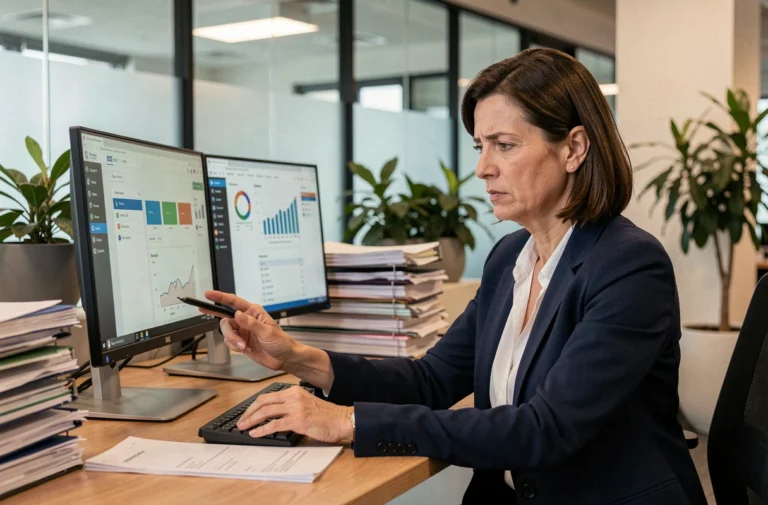
Managing a home project involves coordinating multiple stakeholders, mastering fluctuating regulations, and closely monitoring often unpredictable budgets. Administrative delays and communication errors still represent the main source of cost overruns in the residential sector today.
In the face of this web of constraints, some players are gaining an edge through digital platforms that unify tasks, gather all documents, and automate the tracking of stages. This digital revolution is gradually becoming the centerpiece for making home construction more efficient and less stressful.
Current Challenges in Home Project Management
In France, home project management brings together a wide range of experts: architects, craftsmen, notaries, real estate professionals, not to mention the clients themselves, whether they are future homeowners or investors. Each holds a part of the expertise, but orchestrating this plurality remains a challenge. Administrative procedures, including building permits, preliminary declarations, and adjustments to the PLU or RNU, multiply points of friction.
On the side of both construction professionals and individuals, pressure is mounting for more transparency and traceability. Construction companies must deal with shifting schedules, material supply, and subcontractor coordination. At the slightest timing error, there are delays, disputes, and skyrocketing costs. In this environment, digitalization is beginning to accelerate the sector, dematerialization shortens deadlines, but tools remain too often scattered and poorly connected.
A regulatory point not to overlook: hiring an architect becomes mandatory for floor areas exceeding 150 m². This constraint requires meticulous documentation and careful anticipation of tasks. Successfully completing a project today thus involves tailored support, tools suited to each phase, from the initial design to energy renovation.
Solutions are emerging to support this evolution. For example, the maisonluminea.fr platform on Parlons Déco offers structured support, centralizing plans, documents, and administrative tracking, while streamlining interaction between clients and construction professionals. This leads to greater rationality in managing construction sites and, above all, builds trust, an essential ingredient when it comes to successfully completing a project in a world where standards and competition dictate the pace.
Platforms and Software: What Solutions to Simplify Your Processes?
Digital transformation is now essential in residential real estate. Thanks to innovative platforms, data is centralized, tasks are synchronized, and the interface becomes accessible for both construction professionals and individuals. In a single online space, all administrative documents, plans, quotes, and project tracking can be found. This organization limits information loss, streamlines communication, and accelerates processing times.
Electronic signatures speed up file validation and avoid time-consuming back-and-forth. Blockchain ensures the security of transactions and the reliability of property condition reports, consolidating trust between each party. These platforms also offer advanced tools: 3D simulators, calculators, dashboards. This allows users to design their plans, visualize the space, estimate their budget, or track the financial progress of the project.
Artificial intelligence plays a decisive role: it analyzes real estate data, refines estimates, and anticipates trends using big data and open data. Users benefit from very detailed market analyses, better anticipate costs and regulatory constraints, and manage their projects on demand. Finally, these platforms connect existing business tools (CRM, portals, property management) for a seamless experience, from the first sketch to final delivery.
As a result, both professionals and individuals access a smooth user experience and benefit from a comprehensive view at every stage. Management gains in transparency, and everyone finds their place in a collaborative chain where technology structures and simplifies the journey.

Discover a New Way to Manage Your Housing Project, from Idea to Realization
Designing, building, organizing: each step of a home project today requires method, speed, and clarity. An innovative platform brings together the entire journey, from the initial sketch to the handover of keys. Interactive dashboards provide real-time views of the project’s progress, the presence of craftsmen, and the advancement of the schedule.
Thanks to multi-user collaboration and integrated document management, every professional—architect, craftsman, future resident—accesses their data, shares feedback, and validates stages. The interactive mapping highlights site constraints, anticipates connections, and identifies areas to exploit or optimize.
Artificial intelligence helps refine estimates, provide targeted advice, and identify inconsistencies, whether in design or site organization. Digital tools simplify the preparation of procedures, the simulation of layouts, and budget evaluation.
Here are the key features that these platforms offer to support every project holder:
- Budget and deadline tracking
- Collaborative document management
- 3D visualization of the project
Digitalization transforms property management: fewer errors, shorter deadlines, precise project management from the first plan to final decoration. Both professionals and individuals benefit from a clear experience tailored to each housing ambition. Ultimately, the entire sector is taking a new turn, and the home of tomorrow is already being built differently than that of yesterday.