
One in three families is still unaware of specific CAF provisions for partial coverage of costs related to a school trip. Some aids, which can be combined or are subject to income ceilings, vary greatly depending on the departments and the agreements signed with the institutions. Strict conditions apply: the trip must meet specific criteria, the application must be submitted before departure, and any missing documentation can lead to a systematic refusal. The allocation also depends on the nature of the trip, the family quotient, and the organization method chosen by the school or association.
School trips and family budget: why the CAF can really make a difference
As soon as a school trip is announced, it’s often the same headache: how to gather the required amount when the family quotient leaves little room? For some households, the cost of an educational trip, whether it’s a discovery class or a language exchange, becomes a barrier, depriving children of a formative opportunity. This is precisely where the CAF intervenes with concrete mechanisms tailored to each territory.
Most provisions take the form of financial aid allocated to families or directly to the organizers. Depending on the departments, other supplements may be added: Vacaf, AVF holiday aid, or even ANCV holiday vouchers, provided certain channels are respected. The diversity of these solutions, not to mention the action of the JPA, for example, reflects local inventiveness in overcoming financial obstacles and giving a boost to collective projects.
It is also worth noting that additional support sometimes emerges from regional councils or cities, particularly for trips like snow classes. A reference document, circular N°2011-117, establishes this simple idea: a family’s income should never close the door to these educational experiences. To navigate the administrative maze, CAF aid for a school trip summarizes all the steps to follow and the conditions based on your situation.
Who can benefit from aid for their child’s trip? Focus on the criteria and relevant situations
Access to CAF aid during a school trip primarily depends on the family quotient: this figure reflects the household’s income and serves as a basis for assessing the level of support possible. Priorities naturally go to the least advantaged families, ensuring that every student has a real chance to go, without sacrificing the balance of the household budget.
Some situations entitle individuals to enhanced support. Children with disabilities, for example, have the option to request tailored assistance through the MDPH or other programs aimed at facilitating young people’s vacations. An official disability notice can provide access to additional support or better coverage of expenses.
There is also specific attention given to households located in QPV (priority neighborhoods for urban policy). Here, the geographical criterion can allow for simplified procedures or increased subsidies. Furthermore, the student’s academic level or the theme of the trip (scientific discovery, sports trip, etc.) is taken into consideration.
To clarify things, here are the points to examine when considering an application:
- Family quotient: the basis of any evaluation
- Child’s profile: disability situation, address in QPV, academic background
- Type of trip proposed and educational aspect of the project
How to submit a request and maximize your chances of obtaining CAF aid
Preparing a request for CAF aid for a school trip starts with planning ahead. You need to gather the necessary supporting documents: beneficiary number, recent family quotient certificate, documents provided by the school or organizer justifying the project and the cost of the trip. The procedure to follow, usually specified by the institution, remains the responsibility of the family.
Depending on the region, the procedure is carried out online in the CAF space or at the departmental fund. Sometimes, a preliminary contact step is required before finalizing the application; elsewhere, everything goes directly through the school. Submission periods vary by location and season: for group departures, it’s best to act quickly as deadlines are tight, especially in spring and early summer.
Be sure to gather all proof of the costs incurred provided by the school, and do not forget to indicate if an association or community is already covering part of the expenses. Living in a QPV or presenting a special support situation for the child can strengthen the application. Thanks to exchanges between CAF, educators, and community networks, some applications progress faster than one might think. With a modest family quotient, the chances increase, although each situation is still examined individually.
Here are some key elements to approach your request under the best conditions:
- Gather all necessary supporting documents
- Strictly adhere to the deadlines specific to each department
- Seek help, if needed, from teachers, social workers, or associations willing to support the process
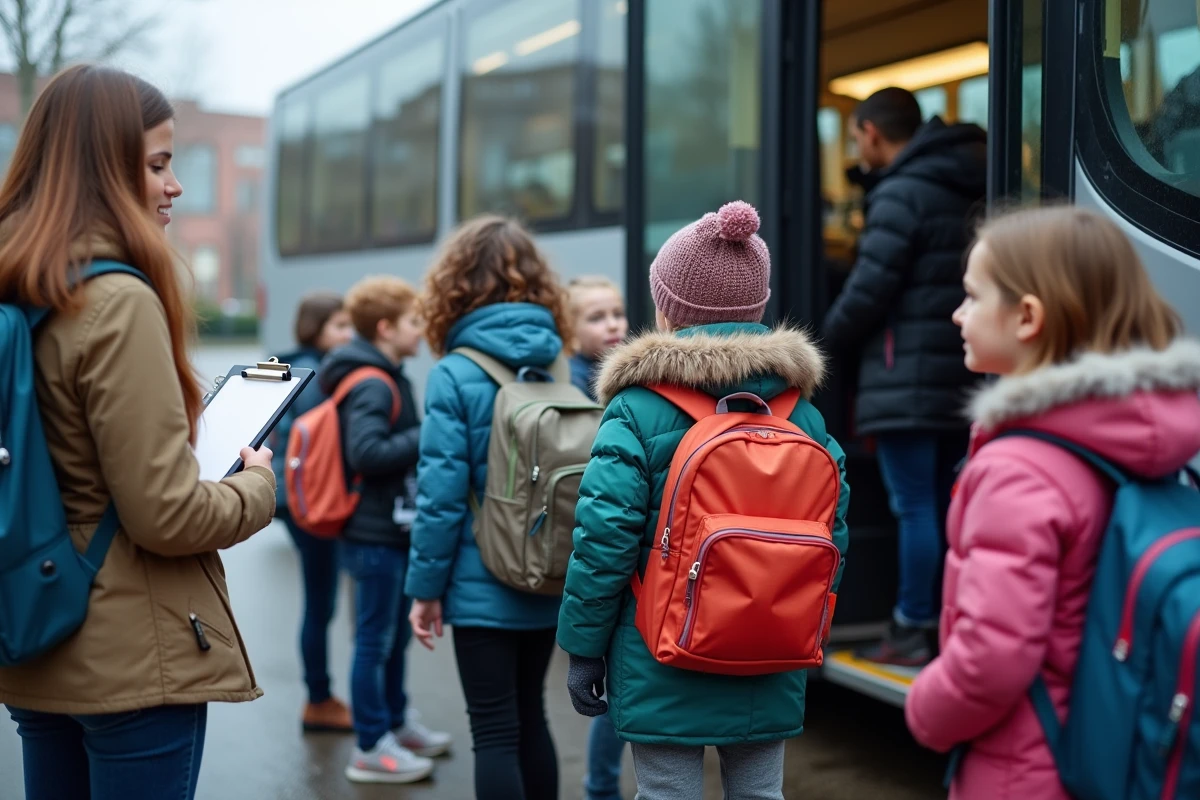
A school trip can sometimes change a child’s trajectory. Thanks to the combined efforts of the CAF, associations, and local authorities, this experience becomes accessible to more people. At the departure platform, seeing your child ready to discover the world is well worth a little administrative effort.