Private balances in French political life are neither mythical nor random. It is often the intertwining of unexpected family ties, hidden complicities, or surprising alliances that determines, more surely than any displayed ambition, the trajectory of public figures. Political stories are rarely written in solitude.
François-Xavier Bellamy is no exception. His journey, woven from discreet yet structuring relationships, shows how fluid the boundary between private sphere and public life remains. Far from caricature, family profoundly shapes political action, like a common thread that connects the intimate to the national stage.
Family ties in the political sphere: the example of Nicolas Sarkozy and its repercussions
Politics in France has long been nourished by dynasties, by solidarities forged out of sight, before exposing themselves to the spotlight. The story of Nicolas Sarkozy is a striking illustration: his path, marked by powerful and sometimes conflicting alliances within his family, has weighed heavily on his choices and successes. For him, intimacy has never been a mere backdrop; it has intruded into his strategies, loyalties, and breakups. Sarkozy’s experience sheds light on how personal life infiltrates political play, sometimes overwhelming it.
François-Xavier Bellamy, too, grew up in an environment where family is not an anecdote. The son of a teacher and an executive, surrounded by his three sisters, he was marked by the intellectual rigor of Henri-IV high school and then the École normale supérieure. Here, family structures thought, sharpens perspective, and influences commitments. For Bellamy, this family foundation is not a superficial argument: it nourishes his convictions and shapes his choices, far from any folklore.
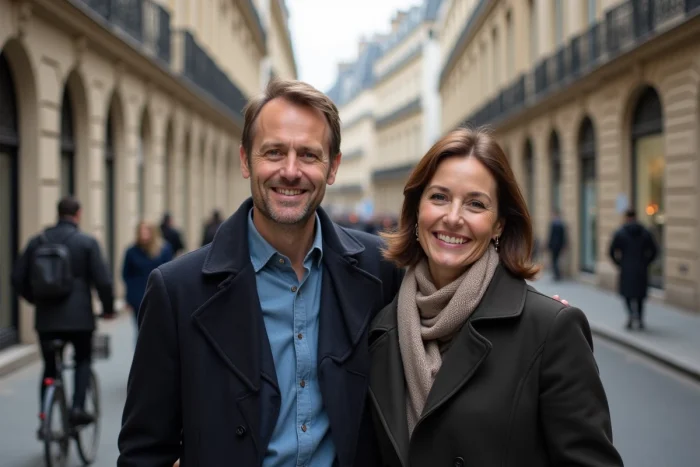
The family dynamic extends even into decisive moments. As detailed in the article the partner of François-Xavier Bellamy, the meeting with the person who now shares his life has transformed his priorities. Far from being a mere change of agenda, this event has profoundly reoriented his vision of commitment and public life. Through this journey, we find the French tradition where invisible ties, woven between Paris and Versailles, continue to weigh on political destinies.
When Zeev Sternhell’s analysis illuminates power dynamics in France
Among those who have questioned the making of power in the French way, Zeev Sternhell occupies a unique place. A historian of ideas, he analyzed how the legacy of the Enlightenment, the passion for equality, and the temptation of centralized power intertwined in political life, generating both democratic impulses and authoritarian tensions. Sternhell, by dissecting the thought of Jean-Jacques Rousseau and the social contract project, highlights this ongoing tension between the thirst for emancipation and the fascination with a strong state.
These questions have become Bellamy’s own. Educated at the École normale supérieure and influenced by the thoughts of Philippe Nemo and Jacques Maritain, he claims the French legacy while questioning new ideological fractures. His positions on family, education, or cultural transmission, carried to the European Parliament, find their source in this dialogue between tradition and modernity. For Bellamy, reflection on Christian education or the traditional family model is part of a long intellectual lineage, nourished by figures from the 18th century.
According to Sternhell, France struggles between desires for renewal and nostalgia for the past. This oscillation is reflected in Bellamy’s journey, who seeks to connect the history of ideas to the tumult of the present. Political divides, shifting alliances, debates on identity: everything is inscribed in this collective memory, where Rousseau dialogues with Maritain and where the Jacobin spirit coexists with the heirs of the Enlightenment.

Reconciliation and fractures: Jean Daniel’s reflections on contemporary sociopolitical challenges
The trajectory of François-Xavier Bellamy is rooted in the paradoxes of a country in search of meaning. The son of a teacher and an executive, he grew up in Versailles, immersed in the rigor of studies and the intellectual effervescence of Henri-IV high school and then the École normale supérieure. But the real turning point comes with Margaux, from the maritime sector. Nothing to do with the cloistered circle of Parisian elites: Margaux brings a fresh breath, a sensitivity forged by solidarity and the precariousness of the maritime world.
Through this meeting, Bellamy discovers the reality of lived values. He shares a passion for sailing, the apprehension of storms, and gratitude towards the rescuers of the SNSM. These concrete experiences, far from abstract discourses, lead him to reassess what brotherhood and solidarity truly mean. It is these moments, lived far from the benches of the hemicycle, that color his interventions in the European Parliament and in the media. The sea, with its risks and moments of grace, becomes a striking image of society: unpredictable, demanding, supportive, capable of both the worst and the best.
Jean Daniel, in his reflections, questions the capacity of society to overcome its divisions. Bellamy, inspired by this approach, seeks to reconcile ethical demands and political engagement. He listens to Orelsan or Bigflo and Oli, not to craft an image, but to understand a generation in search of reference points. This back-and-forth between intellectual heritage and concrete experience nourishes in him a vibrant thought, attentive to the fractures of the country, but also to its promises. In this tension, the future continues to be invented, line by line, encounter by encounter.